Features
Our Cuba flag is manufactured to exacting specifications for maritime use:
-
Premium Nylon Construction: Durable 100% nylon fabric designed to withstand harsh marine environments and salt air exposure
-
Official Design Specifications: Accurately reproduced according to the 1902 official design with proper 1:2 proportional ratio
-
Maritime-Grade Hardware: Reinforced canvas heading with rust-resistant brass grommets for secure attachment to halyards
-
Vivid Color Retention: Advanced dyeing technology ensures the navy blue, white, and red colors remain fade-resistant even under constant UV exposure
-
Multiple Size Options: Available in 12" x 18", 2' x 3', 3' x 5', 4' x 6', and 5' x 8' to match your vessel's flagpole proportions
-
International Code Compliance: Meets requirements specified in the International Code of Signals and ISM Code
-
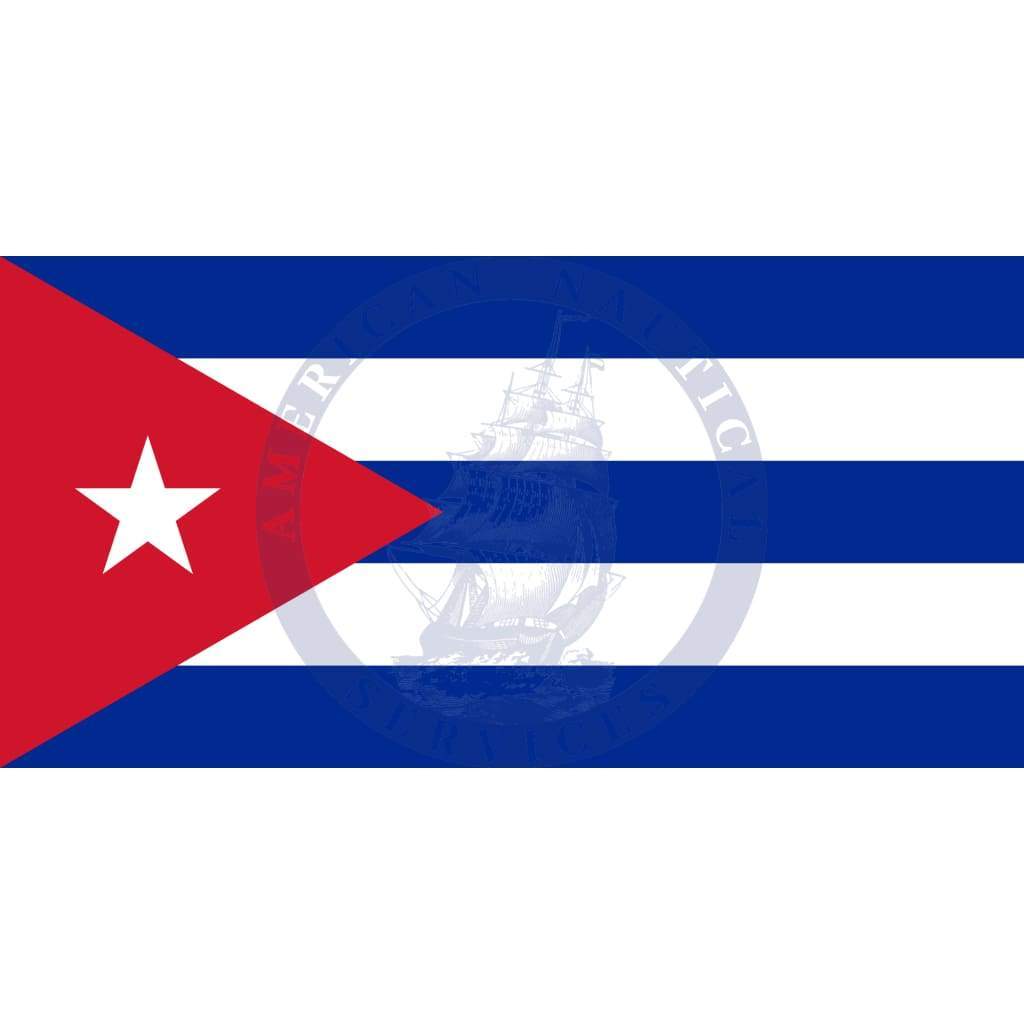
Quick Identification: Distinctive five-stripe design with red triangle and white lone star for instant recognition
Made in USA: Proudly manufactured in the United States using premium materials and skilled craftsmanship.
History
The Cuba flag, known as "La Estrella Solitaria" (The Lone Star), was designed in 1849 in New York by Narciso López and Miguel Teurbe Tolón, Cuban independence movement leaders organizing revolutionary activities from exile. The flag was officially adopted on May 20, 1902, when Cuba gained independence from Spain.
On April 21, 1906, Cuba's first President, Tomás Estrada Palma, issued a decree establishing precise specifications for the flag design, ensuring standardized reproduction. The flag's design has remained unchanged since 1902, representing over 120 years of Cuban maritime identity.
Cuba Flag Meaning: What Do the Colors on the Cuba Flag Mean?
Three Blue Stripes: The three navy blue horizontal stripes represent Cuba's three original administrative departments during Spanish colonial rule.
Two White Stripes: The two white horizontal stripes symbolize the purity of the independence movement and ideals of liberty and self-determination.
Red Equilateral Triangle: The red triangle represents strength, equality, and fraternity (as a Masonic symbol) and honors the blood shed by Cuban patriots during independence wars.
White Five-Pointed Star: The single white star represents Cuba's independence and sovereignty as a free nation.
Civil Flag vs. State Flag
Cuba maintains a single official flag design for all purposes. All Cuba-flagged vessels must display this standard design with the complete stripe pattern, red triangle, and white star.
Peru Flag Meaning: What Do the Colors on the Peru Flag Mean?
Understanding the Peru flag meaning provides insight into the nation's values and history. What do the colors on the Peru flag mean? Each element carries profound symbolism:
Red Stripes: The two red vertical stripes on either side of the Peru flag represent the blood that was sacrificed by Peruvian patriots and independence fighters during the struggle against Spanish colonial rule in the early 1820s. This color honors those who gave their lives in defense of Peru's sovereignty and freedom.
White Stripe: The center white stripe symbolizes peace, purity, and the hope for harmony following independence. The white also represents the freedom and justice that Peru achieved through its revolutionary efforts.
National Coat of Arms: The centered coat of arms adds additional layers to the Peru flag meaning:
-
Vicuña (top left): Represents Peru's native fauna and natural wealth
-
Quinine Tree (top right): Symbolizes Peru's botanical resources and contribution to medicine
-
Cornucopia of Coins (bottom): Represents mineral wealth and economic prosperity
-
Civic Crown: An ancient Roman military honor signifying citizens who saved others' lives
-
Palm and Laurel Branches: Represent victory and glory
Civil Flag vs. State Flag
It's important to note that Peru has two official flag versions. The civil flag (used on smaller 12" x 18" flags) features only the red and white stripes without the coat of arms. The state flag, which includes the national coat of arms in the center, is the version required for maritime vessels and official government use.
Maritime Requirements
Vessels sailing under the Peru Country Flag are required to have this flag on board as part of flag state requirements that derive from maritime regulations in the International Code of Signals and the International Safety Management (ISM) Code. These codes are published by the International Maritime Organization (IMO) as an ongoing effort to reinforce maritime safety procedures and communications to the international maritime community.
Fleet management companies and ship owners are responsible for ensuring that each vessel in their respective fleets has the appropriate flag signage onboard to maintain compliance. This Peru flag is used to identify the flag state a vessel is sailing under and to communicate with other vessels under the provisions of the International Code of Signals.
Specifications
|
Specification
|
Details
|
|
Design
|
Five horizontal stripes with red triangle and white star at hoist
|
|
Colors
|
Navy Blue, White, Cherry Red
|
|
Ratio
|
1:2 (height to length)
|
|
Material
|
100% Nylon
|
|
Hardware
|
Brass grommets, canvas heading
|
|
Official Adoption
|
May 20, 1902
|
|
Design Created
|
1849
|
|
Designers
|
Narciso López and Miguel Teurbe Tolón
|
|
Specification Decree
|
April 21, 1906
|
dir="ltr"
Additional Information
Why Choose American Nautical Services?
As maritime supply specialists, we understand the critical importance of proper flag state identification. Our Cuba Country Flags are:
✓ Certified for maritime use
✓ Compliant with IMO standards
✓ Built to withstand marine environments
✓ Available for immediate shipment
✓ Backed by expert nautical supply service
Frequently Asked Questions
Q: What is the official Cuba flag meaning?
A: The Cuba flag meaning reflects independence heritage. The three blue stripes represent Cuba's three original colonial departments, white stripes symbolize purity of the independence movement, the red triangle represents strength and blood shed for independence, and the white lone star represents sovereignty.
Q: When was the Cuba flag adopted?
A: The history of Cuba flag began in 1849 when designed by Narciso López and Miguel Teurbe Tolón. The flag was officially adopted on May 20, 1902, when Cuba gained independence.
Q: What do the colors on the Cuba flag mean?
A: The navy blue represents the three colonial administrative departments, white represents purity of independence ideals, and red represents blood shed during independence wars and revolutionary principles.
Q: Is the Cuba flag required for vessels?
A: Yes, vessels registered under Cuban flag state must display the Cuba Country Flag according to international maritime regulations including the International Code of Signals and ISM Code.
Q: Why is the Cuba flag called "The Lone Star"?
A: The Cuba flag is nicknamed "La Estrella Solitaria" (The Lone Star) because of the single white five-pointed star, which symbolizes Cuba's independence and sovereignty.